Key takeaways
- Project category—repair, section replacement, full replacement, or installation—is the first cost distinction.
- Removal and disposal can be a major part of driveway and slab replacement.
- Gate width, backyard distance, parking, and work-area access affect labor and equipment choices.
- Drainage, grades, support, and adjoining surfaces can expand the scope beyond the visible damage.
Project type and affected area
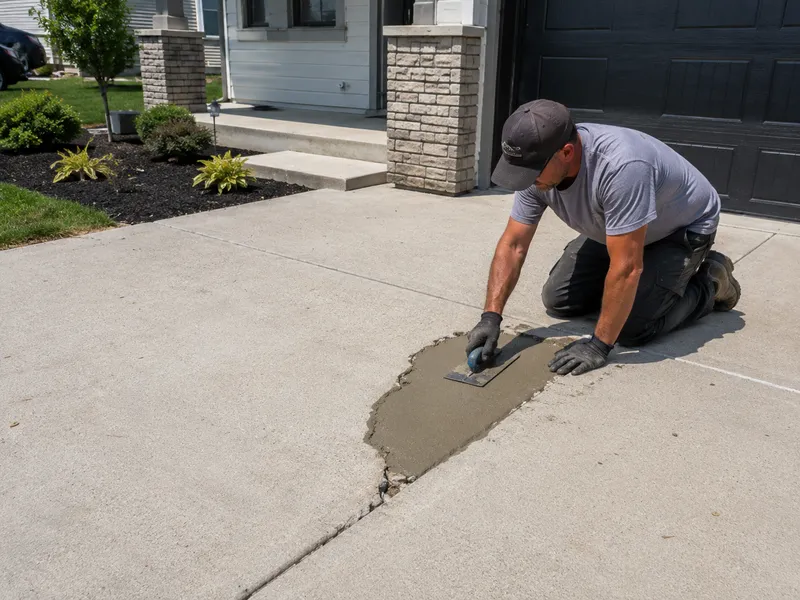
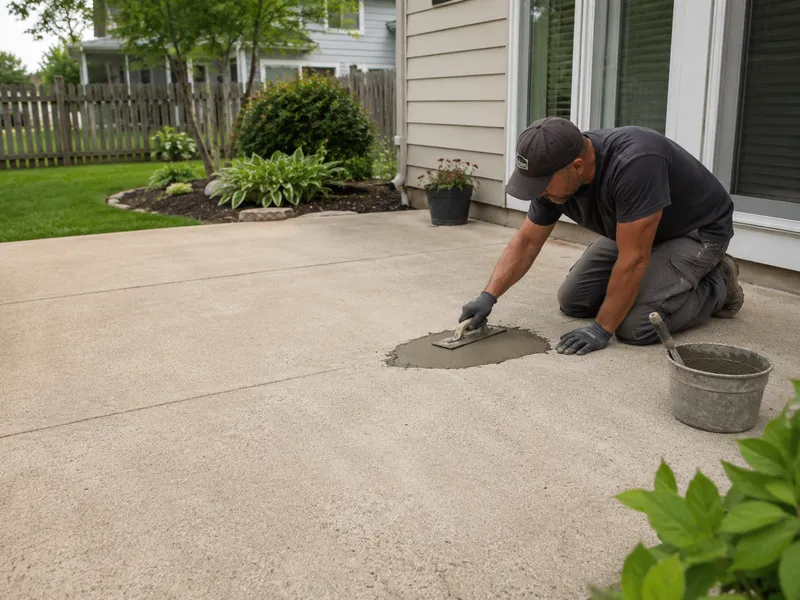
A focused crack or joint treatment is not priced like an individual panel replacement, and a panel replacement is not priced like a complete driveway rebuild. The starting point is the correct project category and the actual area that must be prepared, removed, rebuilt, or connected.
Removal and disposal
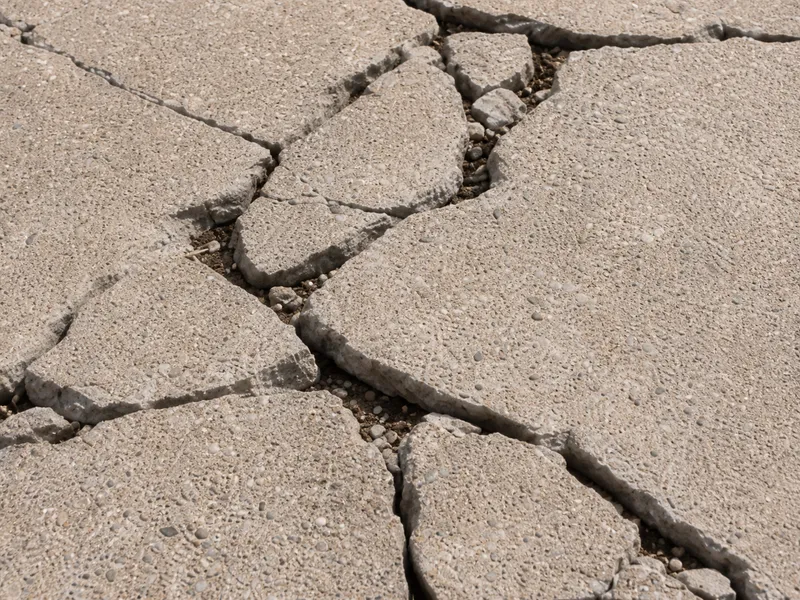
Existing concrete may require saw cutting, breaking, loading, hauling, and disposal. Thickness, reinforcement, confined access, nearby surfaces, and the total material volume affect this part of the work.
Use the smallest scope that reasonably addresses the defined condition, but do not force a repair where the surrounding surface or support requires broader work.
Base and support conditions
The material beneath existing concrete may be suitable, soft, disturbed, wet, inconsistent, or in need of additional preparation. Some of these conditions cannot be fully evaluated until the old concrete is removed.
| Factor | Focused repair | Replacement |
|---|---|---|
| Affected area | Limited and clearly defined | One or more sections, or the full surface |
| Preparation | Local cleaning, removal, or treatment | Removal, support review, forms, placement, and transitions |
| Appearance | Repair remains visible in many cases | New concrete still may not match older adjoining concrete |
Access and site logistics
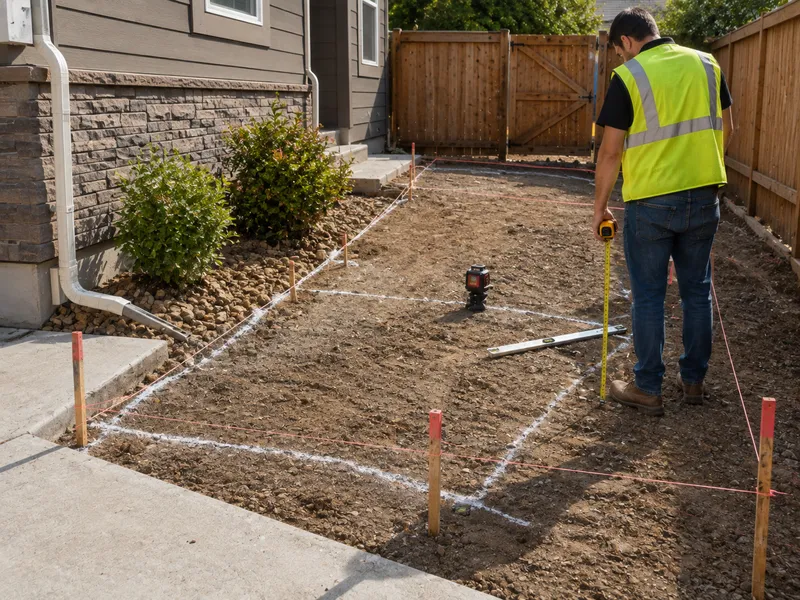
Killeen properties can differ in gate width, side-yard access, distance from the street, slopes, landscaping, parked vehicles, utilities, tenant operations, and delivery routes. These details affect how removal, preparation, placement, and cleanup can be performed.
Drainage, grades, and transitions
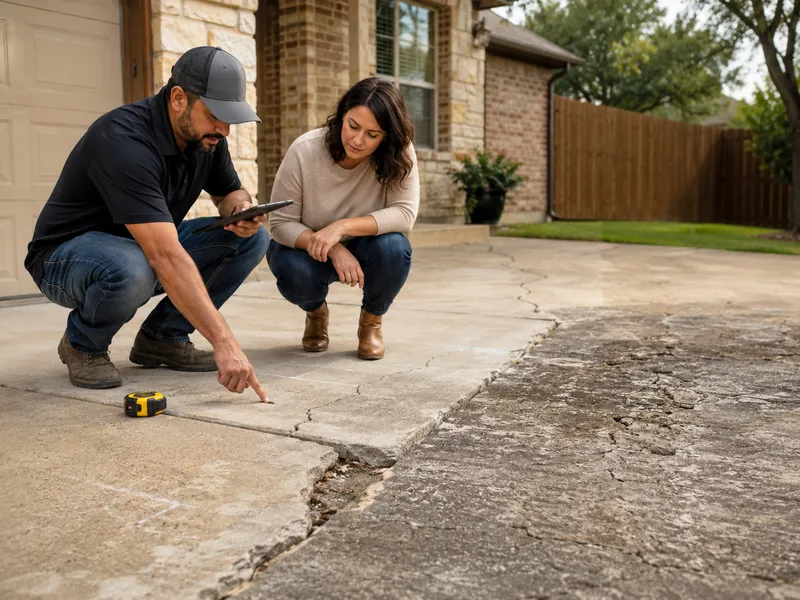
A repair or replacement may need to coordinate with garages, doors, streets, curbs, walks, patios, lawns, and nearby slabs. Correcting a broad low area or awkward transition can require more work than replacing only the visibly damaged concrete.
Finish, joints, and project details
Surface finish, edges, joint layout, reinforcement where appropriate, protection, curing, and the intended use contribute to the final scope. An exact visual match between new and weathered concrete should not be assumed.
This article provides general planning information. It does not determine the final method, price, schedule, or suitability of work for a specific property.
Ready to describe the project?
Include the property location, surface type, dimensions, photos, visible condition, intended use, drainage, and access information.
Request an Estimate